
What is crisis communication and why is it important?
25 May 2025

In the fiscal landscape of 2025-26, the Indian capital market learned a brutal lesson: Liquidity is a drug, but fundamentals are the food.
For the last five years, Investor Relations (IR) often felt like a contest of "who has the best story." Companies with negative cash flows commanded valuations that rivaled established giants, driven by a "growth at all costs" narrative. But in late 2025, the music stopped.
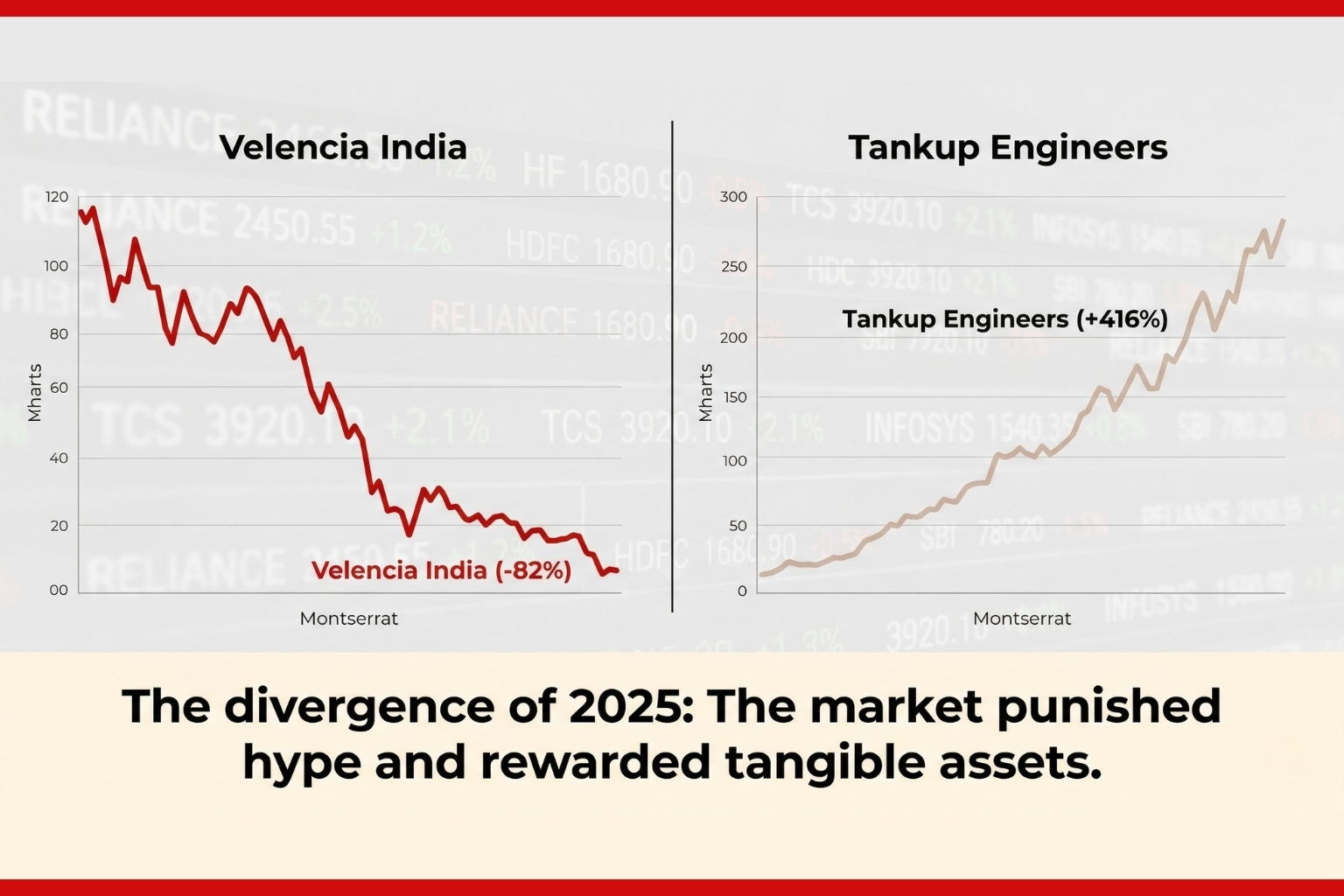
The "SME IPO Bubble" burst, wiping out wealth in weeks. Stocks like Velencia India crashed 82% from their listing price, while Logiciel Solutions plunged 70%. Yet, in the same market, companies like Tankup Engineers delivered returns of 416%.
Why the divergence? Tankup had tangible assets and orders; Velencia had hype.
At Bridgers, we believe that the era of the "visionary" pitch deck is over. To survive the volatility of 2026, IR strategies must pivot from managing share prices to managing business clarity. Here is why Fundamental Analysis is your new PR strategy.
For decades, Indian IR strategies were tailored for the Foreign Institutional Investor (FII)—the "global hot money" that chased momentum. That era has ended.
In CY25, FIIs exited the Indian secondary market to the tune of $17.8 billion. In their place, the Domestic Institutional Investor (DII)—mutual funds, insurers, and family offices—stepped in.
For the first time in history, DII ownership of NSE-listed companies (18.26%) has surpassed FII ownership (16.71%).
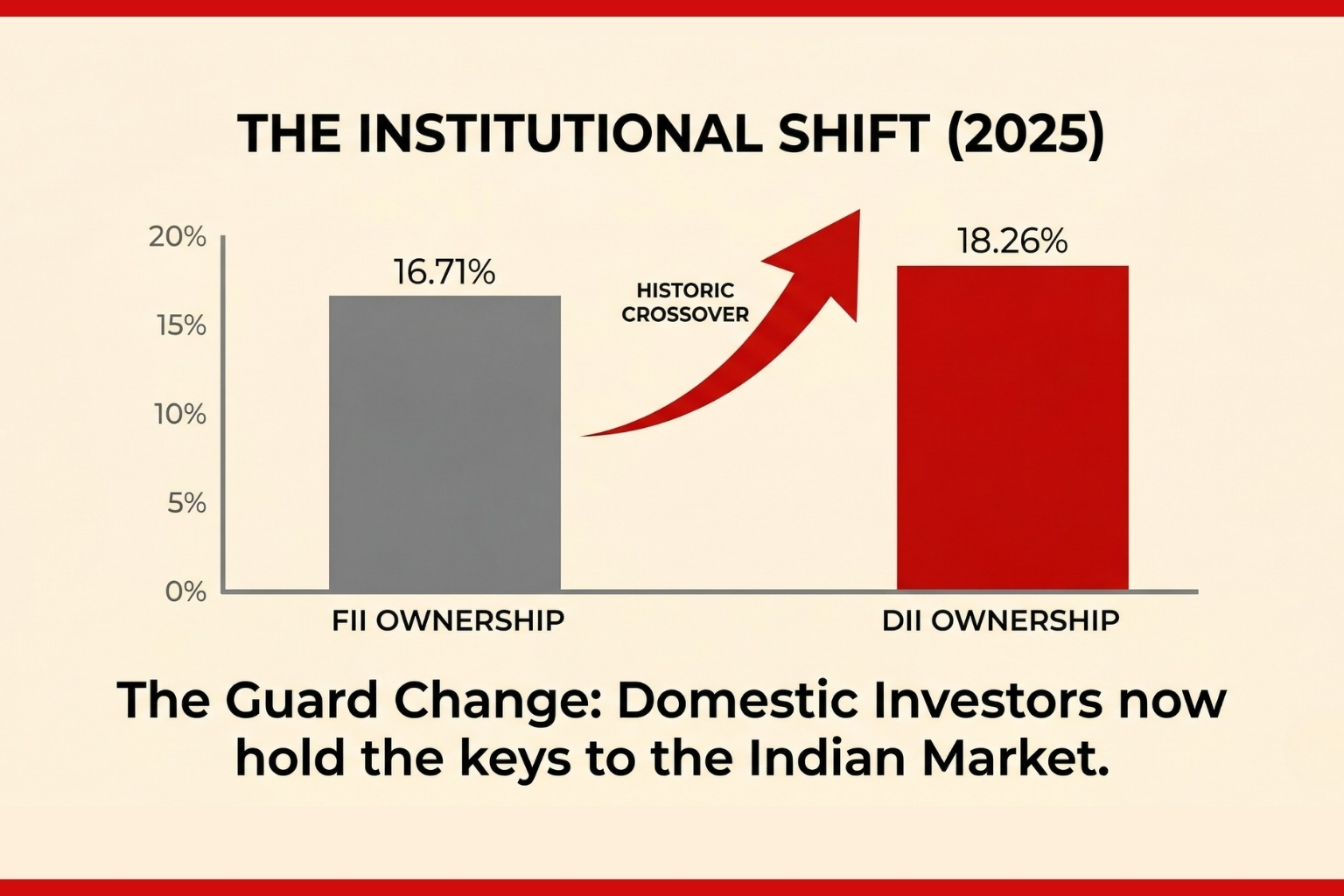
Why this matters for your PR Strategy:
FIIs are Tourists: They leave when global interest rates rise.
DIIs are Residents: They seek long-term compounding and stability.
The Pivot: You can no longer dazzle investors with "Total Addressable Market" (TAM) slides. The domestic fund manager demands to see Return on Capital Employed (ROCE) and supply chain resilience. Your narrative must shift from "Global Scale" to "Domestic Efficiency."
In previous years, you could list a company on a "path to profitability." In 2026, regulators are effectively banning that business model for SMEs.
SEBI’s new norms now mandate that an SME issuer must have an operating profit (EBITDA) of at least ₹1 crore in 2 out of 3 preceding years to be eligible for an IPO. This is a structural intervention designed to filter out "concept stocks".
This reality check has extended to the "New-Age Tech" sector as well. The market has ruthlessly segregated companies based on Unit Economics:
The Rewarded: Zomato (Eternal Ltd) posted a net profit of ₹527 crore and was treated as a fundamental compounder.
The Punished: Swiggy reported a net loss of ₹3,117 crore in FY25 and faced stock de-rating.
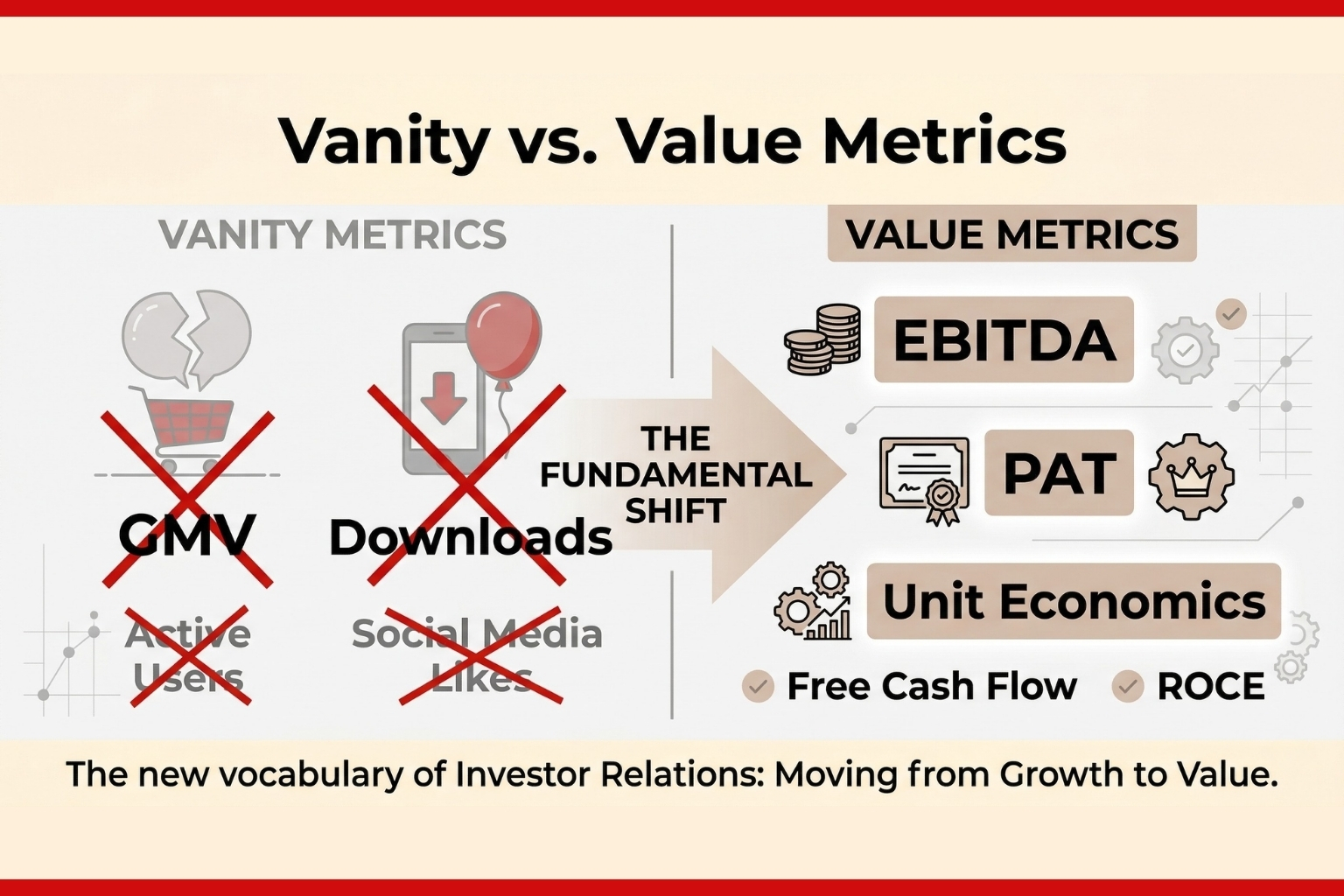
The Lesson: If your PR strategy highlights "Gross Merchandise Value" (GMV) but hides the "Contribution Margin," you are waving a red flag. The market now applies a "scarcity premium" to earnings and a "risk discount" to cash burn.
So, how do you communicate "value" in a market that is skeptical of "hype"? You need a Flexibility-First communication strategy.
A. Kill the PDF, Release the Excel
Institutional analysts in 2026 use AI scrapers and complex models. A static PDF Annual Report is a bottleneck. To build trust, provide downloadable Excel models of your historical financials. This transparency signals confidence and helps analysts cover your stock faster.
B. Report the "Boring" Metrics
Stop highlighting "Active Users" if they aren't paying. The institutional focus has shifted to:
ROCE (Return on Capital Employed): Prove you are using capital efficiently, not just hoarding it.
Free Cash Flow Conversion: Show the bridge from EBITDA to Cash. If your profits are stuck in "Receivables," the market will assume you are inflating numbers.
Unit Economics (CM2): For tech companies, disclose the Contribution Margin after marketing and logistics.
C. Contextualize the "Dip"
Volatility is inevitable. But when you use fundamental analysis as a storytelling tool, a "dip in profits" can be explained as "investment in R&D."
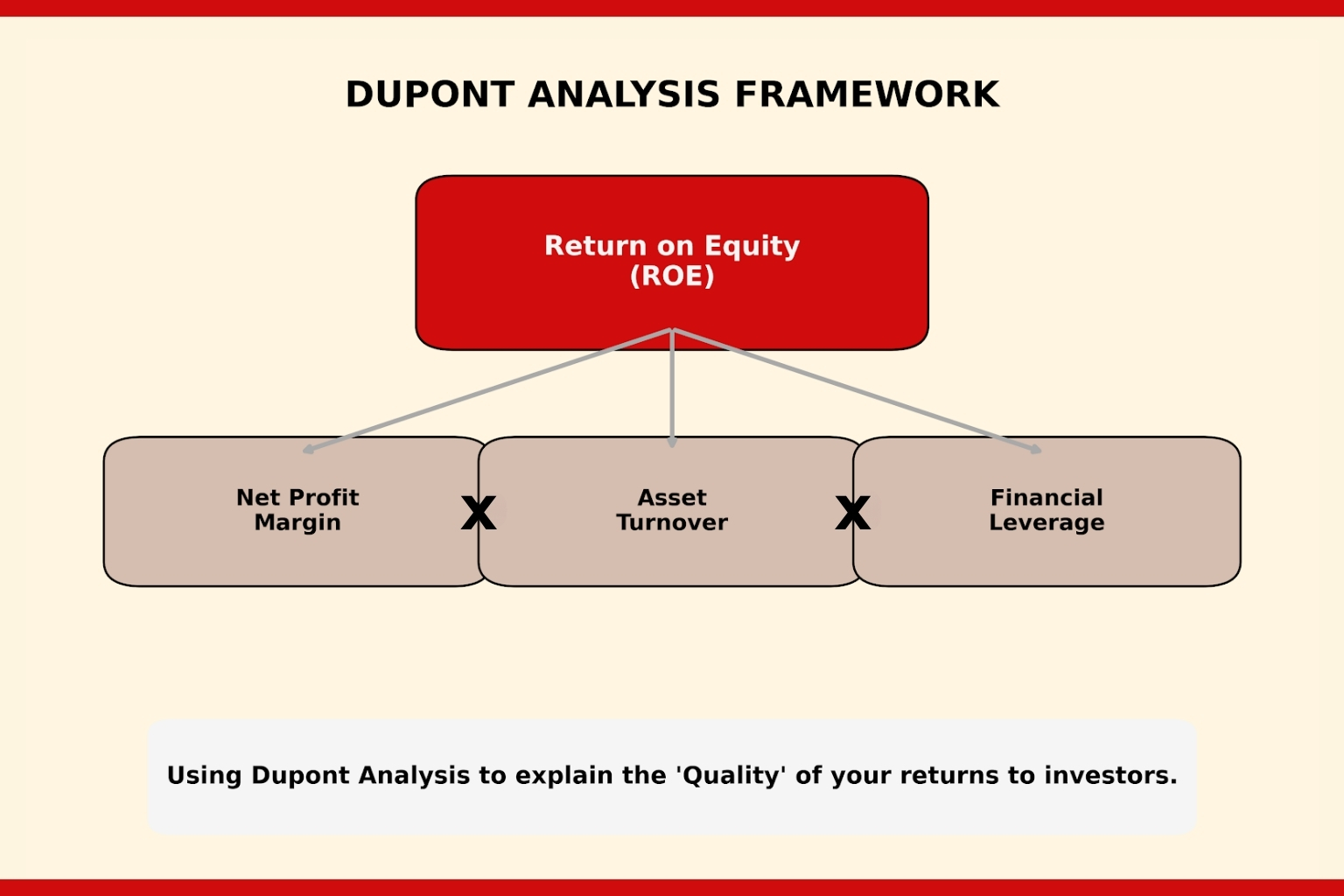
The Bridgers Approach: We don't just release data; we use Dupont Analysis in our communications to show why your Return on Equity (RoE) is moving—whether it’s due to better efficiency or higher leverage.
The events of 2025—from the SME crash to the FII exodus—proved that macro-stability is a tailwind, but micro-fundamentals are the anchor.
In a world of algorithmic trading and skepticism, the only thing that protects your stock price is the irrefutable truth of your numbers. At Bridgers, we help you translate those numbers into a narrative of trust.
Don't just manage perceptions. Manage Value.
Ready to audit your Investor Relations strategy? Contact Bridgers today to align your narrative with the new fundamental reality.
Most Popular Blogs
Newsletter
Categories
About the author
Anubhav Singh: Founder & Managing Director, Bridgers
Anubhav Singh is the Founder and Managing Director of Bridgers, with over 15 years of experience in media relations and strategic corporate communications. He has worked with leading Indian brands across sectors and holds a degree in Mass Communication & Video Production along with an MBA in Marketing. Under his leadership, Bridgers has grown into one of India’s leading PR agencies, known for transparency, innovation, and quality.
Related Articles


