
What is crisis communication and why is it important?
25 May 2025

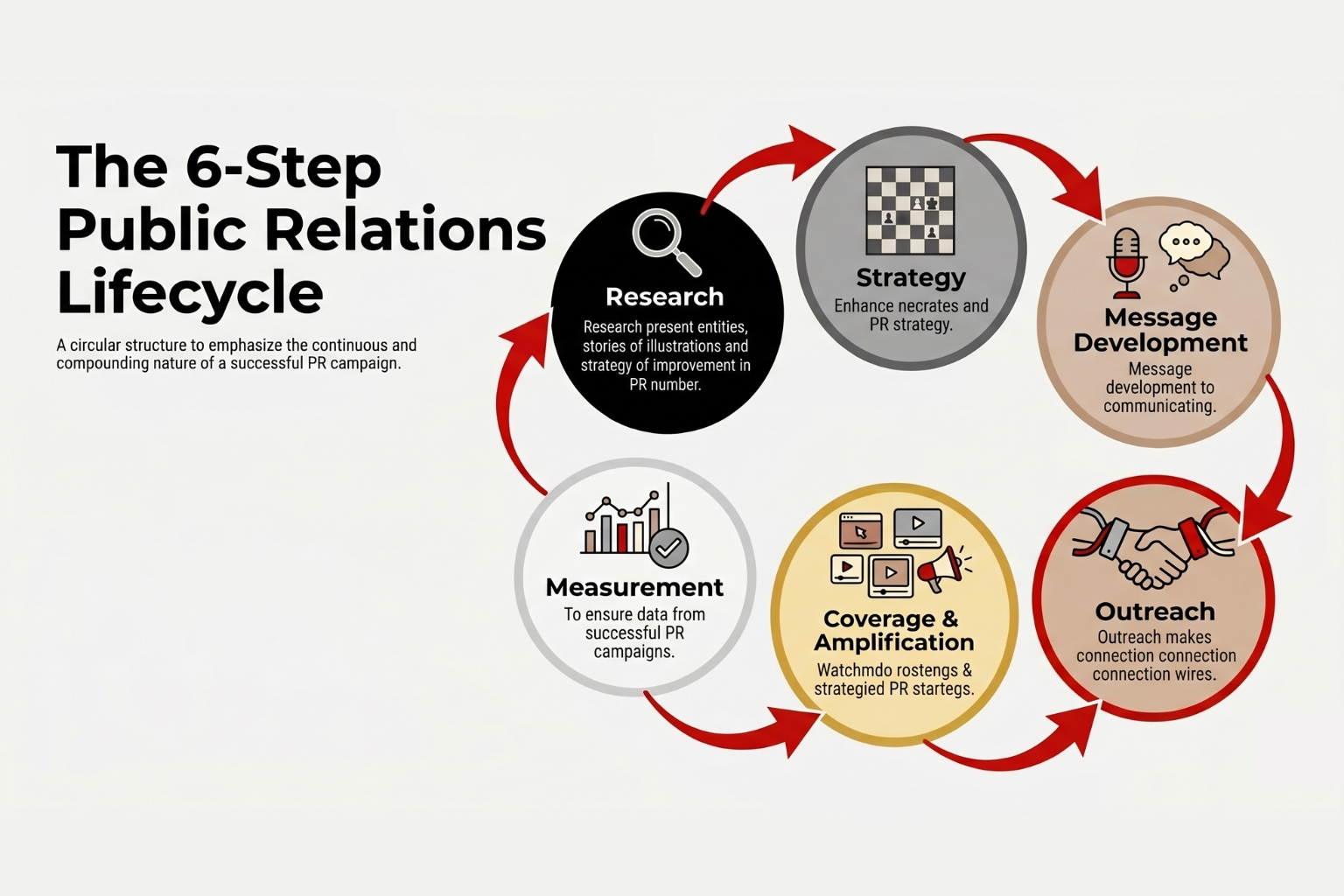
Most people think of a press release as the starting point of PR. In reality, it is one tool within a much larger discipline. A press release does not create a story. It communicates one. And the businesses that consistently earn media coverage understand this distinction before they write a single word.
The mechanics of writing a press release are not complicated. The judgment required to use one well is. Knowing which type of press release your announcement needs, what it has to achieve, and how to put it in front of the right person is where most businesses get it wrong. If you are building a PR programme and want to understand where press releases fit within a broader strategy, start with our PR strategy for beginners guide first.
A press release is a written announcement sent to journalists and media outlets to let them know about something newsworthy. Its job is to give a journalist everything they need to decide whether your story is worth covering, and if they decide it is, to give them the raw material to write about it.
It is not a marketing brochure, and it is not an internal announcement dressed in formal language. A press release that reads like branded content will be deleted before the second paragraph. Journalists receive hundreds every week. They are looking for one thing: a reason to care. If your press release does not give them that in the opening lines, it will not be read past them.
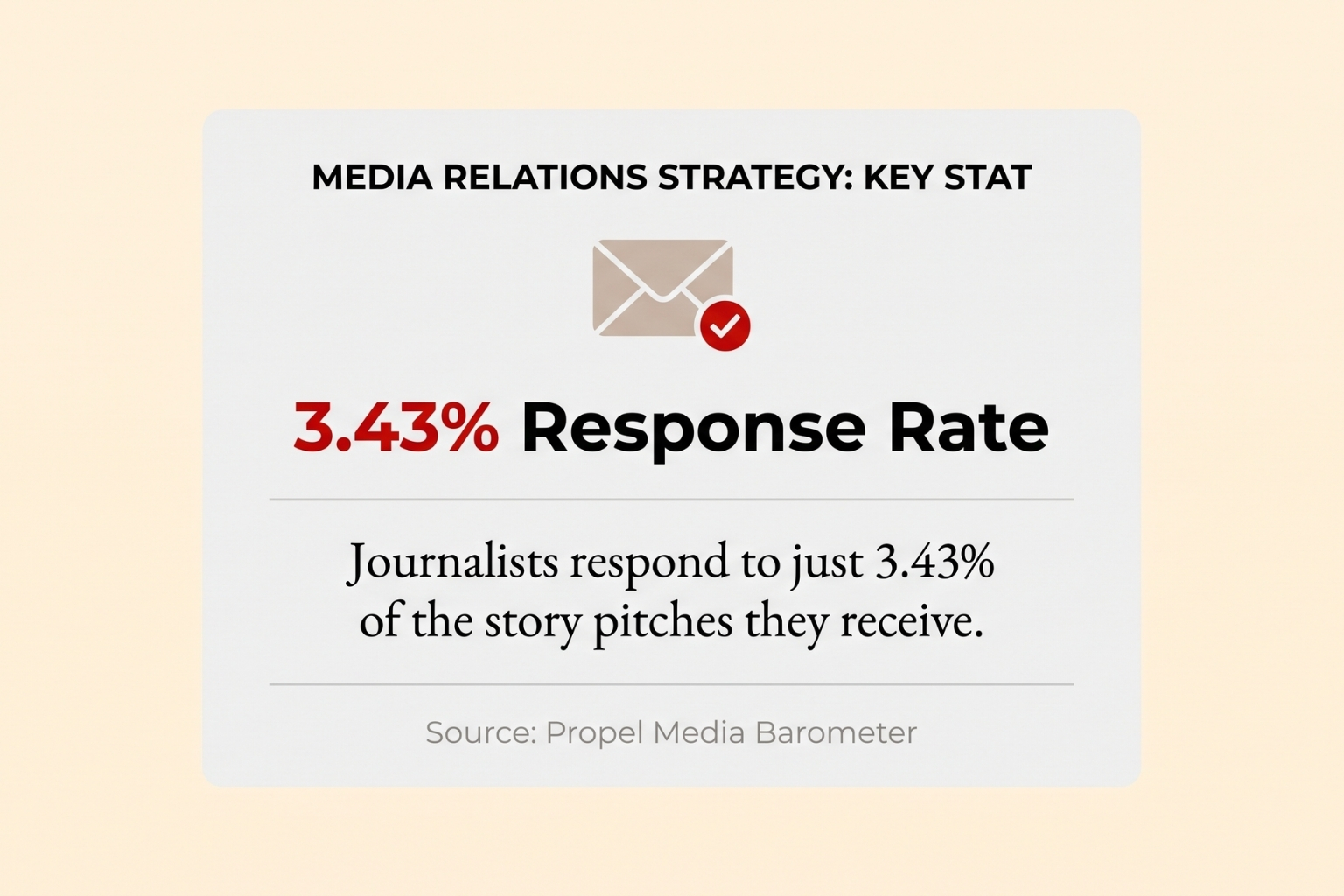
According to Propel’s analysis of over 400,000 PR pitches, journalists respond to just 3.43% of story pitches they receive. The gap between a press release that earns coverage and one that does not almost always comes down to news value and targeting, not format. The format is the floor, not the ceiling.
Not all press releases are written the same way, and they should not be. Each type serves a different purpose, reaches a different audience, and needs to lead with a different angle. Understanding which type your announcement falls into is the first decision you make before writing a word.
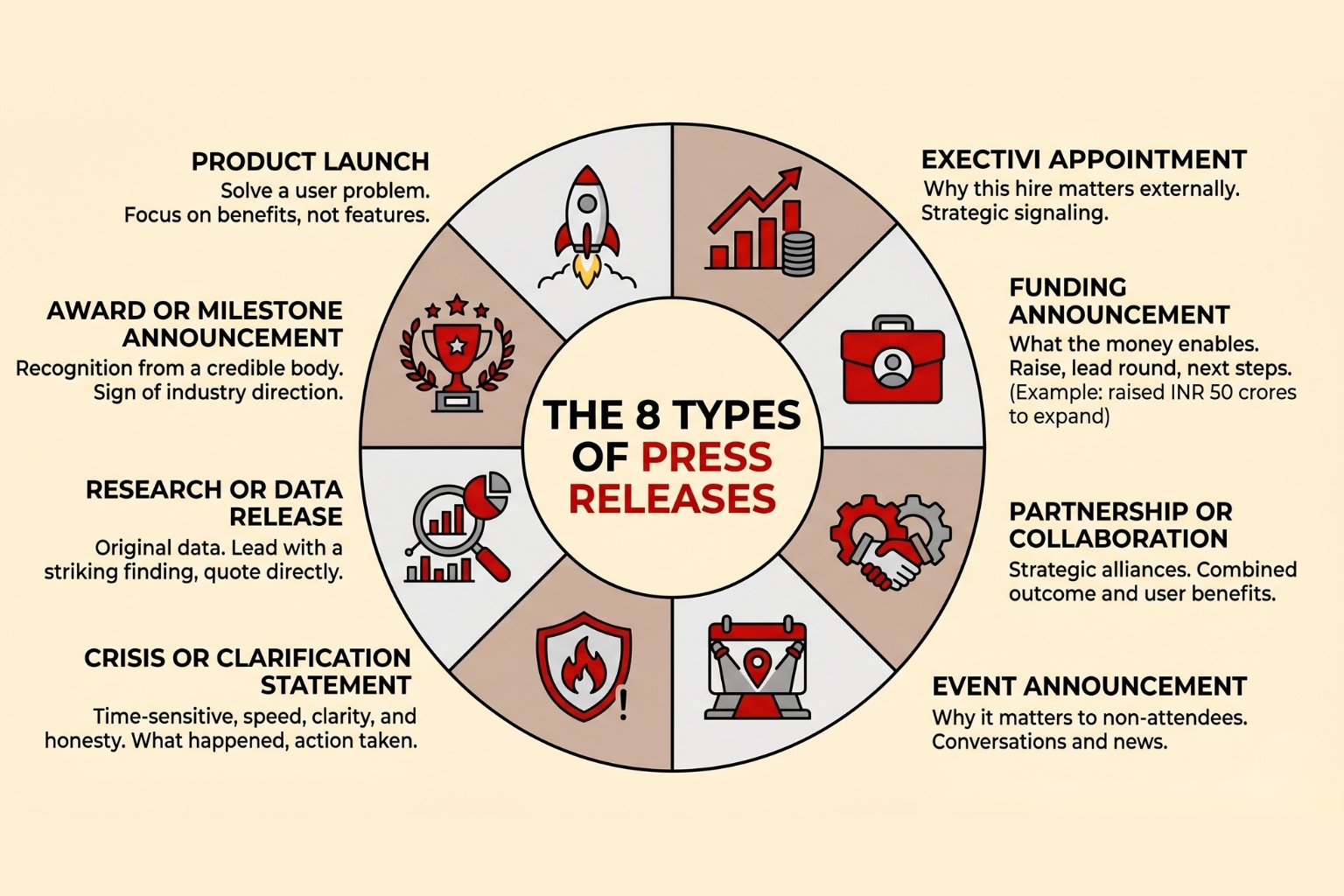
The most common press release type, and the most commonly miswritten. Most product launch releases lead with features: what the product does, how it works, what it includes. Journalists do not want that. They want to know what changes for the people who need it. Lead with the problem the product solves and the audience whose life it improves. The specifications belong in the body, not the headline.
The news in a funding release is not the money. It is what the money makes possible. A headline that says a company raised funding tells a journalist nothing. One that says a company raised INR 50 crores to expand into Tier 2 cities gives them the story before they even open the release. Lead with the amount, who led the round, and specifically what the capital enables. A strong funding release answers three questions: why this company, why now, and what comes next.
New hire announcements earn coverage when they connect internal news to external impact. The mistake is writing this as an HR update. Journalists want to know why this appointment matters beyond the company itself, what this person brings that signals something about where the business or industry is heading. Lead with the hire’s most relevant credential and the strategic reason behind the appointment. The job title can wait for the second sentence.
A partnership release covers strategic alliances, integrations, or collaborations between two organisations. The most useful piece of advice here is also the most overlooked: make sure each organisation’s quote says something the other one does not. Two quotes that both express excitement about the partnership tell a journalist nothing. Two quotes that each explain what the partnership specifically delivers from their side give the journalist usable material. Lead with the combined outcome and what it enables for the market, not the fact that the partnership exists.
The news hook in an event release is not the logistics. Any journalist can read a date and venue. What they need to know is why the event matters to people who are not attending. What conversations will happen there? What decisions or announcements are expected? What makes this event relevant to their readers right now? Answer that question in the opening paragraph, and the rest of the release follows naturally.
This is the most time-sensitive type and the one where the stakes are highest. Speed, clarity, and honesty are the only variables that matter. The format is tighter, the language is plainer, and there is no room for corporate hedging to obscure the point. If something went wrong, say what it was, what you are doing about it, and what people can expect. A crisis statement written to protect the company will always do more damage than one written to inform the public.
Of all eight types, a well-executed data release has the highest earned media potential. The reason is straightforward: original data gives journalists something to report that they cannot get from anywhere else. That is the strongest possible news hook. Lead with the single most striking finding, not the report title. Write the statistics so a journalist can quote them directly without downloading the full document. The release should make the research accessible, not just announce that it exists.
Award and milestone releases work when the recognition comes from a credible body that your target audience will recognise. The story is not that you won. It is what the win signals about where the company or the industry is heading. Lead with the name of the award and the awarding organisation. Include a quote that adds context, ideally one that links the recognition to a broader industry development rather than simply expressing gratitude.
Regardless of type, every press release shares the same structural logic. Each element below has a specific job. When one of them fails, the release usually fails with it.
The headline is the only part of your press release a journalist may read before deciding whether to open it. Write it to state the news directly, the way a journalist would write a news headline, not the way a marketing team would write an advertisement. Use active verbs. Keep it under 70 characters. Include a number where one is relevant, because numbers signal specificity. The test is simple: does the headline answer what happened, or does it tell the reader how to feel about it?
The dateline opens the first paragraph and states the city of origin and the release date, followed by the status: either For Immediate Release, or a specific embargo date and time. If you use an embargo, be precise. An ambiguous embargo creates confusion and can result in early publication, which damages the relationship with the journalist and the story’s impact.
The lead paragraph answers the five Ws: who, what, when, where, and why. A journalist should be able to understand the complete story from this paragraph alone. Lead with the most newsworthy information. Every word of scene-setting or background context that appears before the actual news pushes a journalist closer to moving on. Get to the point in the first sentence.
The body supports the lead with detail, data, and context in descending order of importance. This is the inverted pyramid: most critical information first, supporting detail below. Journalists frequently cut from the bottom when they are short on space. If your essential story is not told before you get to the supporting material, it may not make the final article.
Every press release needs at least one quote from a relevant spokesperson, typically the founder, CEO, or the most senior person connected to the announcement. If anyone could have written the quote, rewrite it. A quote that says the company is excited or honoured gives a journalist nothing to work with. A quote that says something specific, something only this person could credibly say, gives a journalist a ready-made soundbite they can use without paraphrasing. That is the difference between appearing in the story and being cut from it.
The boilerplate is a short, standard paragraph at the bottom of every release that describes the company. Journalists use it to write the attribution line in their story, so it needs to be accurate, up to date, and free of marketing language. Write it once, keep it consistent across all releases, and update it as the company grows.

This is one of the most misunderstood distinctions in PR, and getting it wrong costs both money and coverage quality. Here is how the two approaches actually differ.
When people say wire, they usually mean one of two completely different things. The first is a news wire service, such as the Associated Press or Reuters. These are newsrooms with their own journalists who write original, independent stories and distribute them to subscribing outlets. You do not send press releases to these agencies expecting them to be published. They do not publish yours. They write their own.
The second is a press release distribution wire, such as PR Newswire or Business Wire. These services distribute company-written releases to a list of journalists and outlets. You write the release. The wire delivers it. Whether any journalist chooses to cover the story still depends entirely on the news value of what you sent.
A release written for direct journalist outreach is personal and targeted. You are pitching a specific story to a specific journalist who covers a specific beat. It can be accompanied by a short covering note that shows you have read their work and understood their audience. The angle can be tailored to what that publication covers.
A release written for wire distribution must be entirely self-contained. It will be read by syndication systems and news aggregators as well as journalists. There is no covering note to provide context. The release needs to communicate the full story clearly on its own, in a neutral, factual tone that works across multiple outlet types simultaneously.
Wire distribution makes most sense for publicly listed companies issuing regulatory or financial disclosures, funding announcements where simultaneous broad reach matters, situations where SEO visibility through syndicated online coverage is the primary goal, and announcements targeting international media alongside Indian outlets.
For most Indian startups and growing businesses, a well-crafted release sent directly to ten relevant journalists will outperform a wire blast to five hundred broadly targeted contacts. Wire services distribute your release to lists. They do not build relationships with you. You are renting distribution, not building trust. There is no direct connection between you and the journalists on the other end, which means there is no relationship to call on when the next announcement comes around.
At Bridgers, the releases that consistently earn coverage are the ones built around a clear news angle and sent to journalists who cover exactly that beat. The wire has its place. For most of the businesses we work with, especially at the early and growth stages, it is not the right first move.
Format and structure are table stakes. Every competent press release has a headline, a lead, a quote, and a boilerplate. What separates the ones that earn coverage is judgment, and that is harder to codify. Here is what we consistently observe at Bridgers.
The first thing that determines whether a release gets read is whether it has a news angle rather than a company angle. These sound similar, but they produce very different releases. A company angle asks: what do we want people to know? A news angle asks: why would a journalist’s readers care about this? A release built around the second question gets opened. A release built around the first gets deleted.
Assuming the angle is right, timing determines whether it gets acted on. A product release sent during a major news cycle will be buried regardless of how strong the story is. A data release timed to a live regulatory debate can earn significant coverage with no other changes. Timing is a strategic decision, not an afterthought, and it is one of the most underused levers in press release distribution.
Once a journalist opens the release, personalisation determines whether they respond. A release sent with a two-line covering note that references the journalist’s recent work will always outperform the same release sent to a generic list. Personalisation is not flattery. It is evidence that you understand your audience and have chosen them deliberately rather than carpet-bombing their inbox.
If a journalist decides to write the story, the quality of the quote determines whether your spokesperson appears in it. A generic quote forces the journalist to paraphrase or cut your voice from the piece entirely. A quote with a specific, original point of view gives them something they can use verbatim. That is the difference between your brand appearing in the story and being a background data point in someone else’s.
Finally, brevity determines whether you will be pitching that journalist successfully again. The best press releases are between 300 and 500 words. Every word beyond what is necessary to tell the story tests a journalist’s patience. Respect their time, and they will remember it next time your name appears in their inbox.
A press release cannot make non-news into news. The first question to ask before writing any release is not how to write it. It is whether there is a story worth writing at all. No amount of polished language will turn a minor internal update into something a journalist’s readers will care about.
It also cannot guarantee coverage even when the story is genuinely strong. Editorial decisions depend on timing, competing stories, publication priorities, and factors entirely outside your control. A good press release improves your odds significantly. It does not determine the outcome.
For a step-by-step guide to writing a press release, including structure, language guidance, and a template you can adapt, see our complete guide on how to write a press release.
The businesses that earn consistent media coverage are not the ones that send the most press releases. They are the ones who know when they have a story worth telling, how to tell it clearly, and who to tell it to. Format is learnable in an afternoon. Judgment takes longer, and it is built from understanding your media landscape, knowing your journalists, and making every release count.
A press release opens a door. The story, the relationship, and the relevance are what get you through it.
Want to make sure your press releases are reaching the right journalists with the right story?
At Bridgers, we build press releases around genuine news angles, target them to the right publications, and write them in a way that makes a journalist’s job easier rather than harder. If you want to understand what that looks like for your specific announcement or ongoing PR programme, we would be glad to talk.
A press release is a written announcement sent to journalists and media outlets to inform them about something newsworthy from your organisation. Its purpose is to give a journalist the information they need to decide whether to cover your story, and the raw material to write about it if they decide to. It is a PR tool, not a marketing document.
Between 300 and 500 words for most announcements. The purpose of a press release is to communicate a news angle clearly and efficiently, not to tell your full brand story. Data releases and funding announcements sometimes run slightly longer when the supporting detail genuinely adds to the story, but 600 words is a practical ceiling for any type.
Wire services make most sense for publicly listed companies issuing financial or regulatory announcements, funding releases where simultaneous broad reach matters, and situations where SEO visibility through widespread online syndication is the goal. For most startups and growing businesses, direct outreach to targeted journalists produces better quality coverage than wire distribution to a broad, untargeted list.
Write the headline the way a journalist would write a news headline, not the way a marketing team would write an advertisement. Use active verbs: launches, appoints, raises, partners. Keep it under 70 characters. Include a number where one is relevant. The test is whether the headline answers the question of what happened, not what the company wants people to feel about it.
Press releases that earn genuine editorial coverage in credible online publications generate high-quality backlinks that have a measurable impact on search rankings. A release distributed through a wire service will appear on syndication sites and may generate some backlinks. Still, the more significant SEO value comes from the earned coverage the release generates in independent publications, not from the release itself.
The absence of a genuine news angle. Businesses regularly send press releases about things that matter internally but have no relevance to a journalist’s readers. A new product, a new hire, or a partnership is not automatically news. The news is what those things mean for the market, the industry, or the people affected. If the press release cannot answer why a reader who does not know your company should care, it will not be covered.
Most Popular Blogs
Newsletter
Categories
About the author
Anubhav Singh: Founder & Managing Director, Bridgers
Anubhav Singh is the Founder and Managing Director of Bridgers, with over 15 years of experience in media relations and strategic corporate communications. He has worked with leading Indian brands across sectors and holds a degree in Mass Communication & Video Production along with an MBA in Marketing. Under his leadership, Bridgers has grown into one of India’s leading PR agencies, known for transparency, innovation, and quality.
Related Articles


