
What is crisis communication and why is it important?
25 May 2025

If you have read our guide to what public relations is and our complete guide to reputation management, you have probably noticed the two overlap constantly. What is not the same is the goal each discipline works towards, and that difference has a price tag when businesses miss it.
Public relations is measured by what climbs. Reputation management is measured by what falls. PR succeeds when media mentions rise or share of voice grows. Reputation management succeeds when negative search results drop, when sentiment improves, when trust recovers. One is an input, the communication engine you run. The other is an outcome, the asset that engine is supposed to protect.
Neither column is optional. A business with rising visibility and falling trust is amplifying a problem. A business with strong trust and no visibility is invisible to the people who would trust it. A serious communications programme needs both columns working at once.
India has moved past that framing. Reputation management is now taught as a distinct board-level competency, not a PR outcome, and the clearest evidence is academic rather than commercial.
Indian agencies have restructured around this logic. Adfactors PR runs “Corporate Reputation” and “Issues and Crisis Communications” as separate practice groups from media relations, staffed by former financial journalists and regulatory lawyers rather than publicists. Burson India has a dedicated Chief Issues and Crisis Officer sitting laterally to its PR account teams. Avian We. markets “Crisis and Reputation Management” as its own pillar, distinct from consumer PR.
The shift is visible at board level too. WTW’s Reputational Risk Readiness Report 2026 found 46% of organisations now have formal board-level processes for reputational risk, more than double the 15% reported in 2024. Our guide to corporate reputation and board governance in India covers what that shift requires of a listed company.
None of this means the disciplines operate in separate rooms. A single action routinely does both jobs at once.
When a company issues a press statement to clarify a policy change, that statement is PR because it feeds journalists a coherent story. It is reputation management at the same time, because it populates the company’s own record, crowds out speculation, and becomes part of what shapes trust the next time someone looks the company up. One action, two functions.
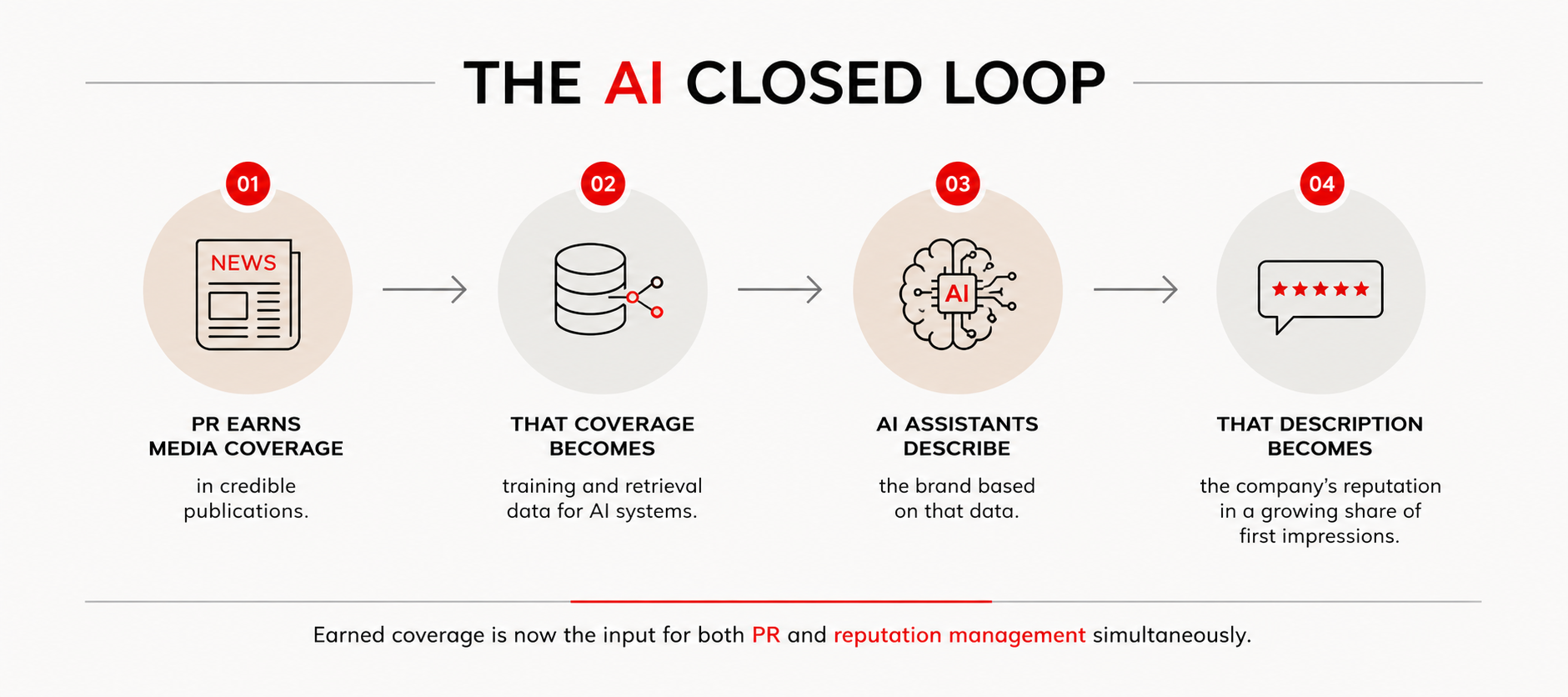
Generative AI has pulled the two disciplines back together after years apart. PRCAI SPRINT 2026 found 83% of Indian communicators agree earned media is gaining importance because large language models prioritise third-party sources over paid placement, and 70% now treat generative engine optimisation as a distinct strategy. A brand cannot buy a positive AI description, it has to earn one, and earning one is a PR function feeding directly into a reputation outcome. If PR stops securing credible coverage, the AI has nothing to draw on except unfiltered complaints.
The clearest recent Indian example of what happens when a business runs PR at full volume while a reputation problem goes unmanaged underneath it is Ola Electric, and the financial numbers are stark enough to be worth walking through.
We covered how Ola Electric handled its dispute with comedian Kunal Kamra in our reputation mother blog, where the point was response speed. The point here is different: what happened to the business afterwards.
Through 2024, Ola Electric ran an aggressive PR strategy around rare-earth-free motors and battery development, with founder Bhavish Aggarwal maintaining a prominent public profile. Underneath it, monthly complaints reportedly hit 80,000 in September 2024 alone, with thousands of scooters unrepaired in service centres. When the Kamra dispute went public that October, leadership responded with the same combative instincts rather than a fix.
The reverse case is just as instructive. In 2024-25, Westlife Foodworld, which operates McDonald’s across West and South India, faced a public crisis over cheese authenticity. A quiet fix alone would not have been enough, since the story was spreading too fast to leave uncontested. Handled by Avian We., the “Navigating the Cheese Crisis” campaign paired a verified supply chain fix with an aggressive media push to get that verification in front of the public, and won Gold for Best Management of Crisis at the 2025 Fulcrum Awards. Neither discipline alone would have been enough.
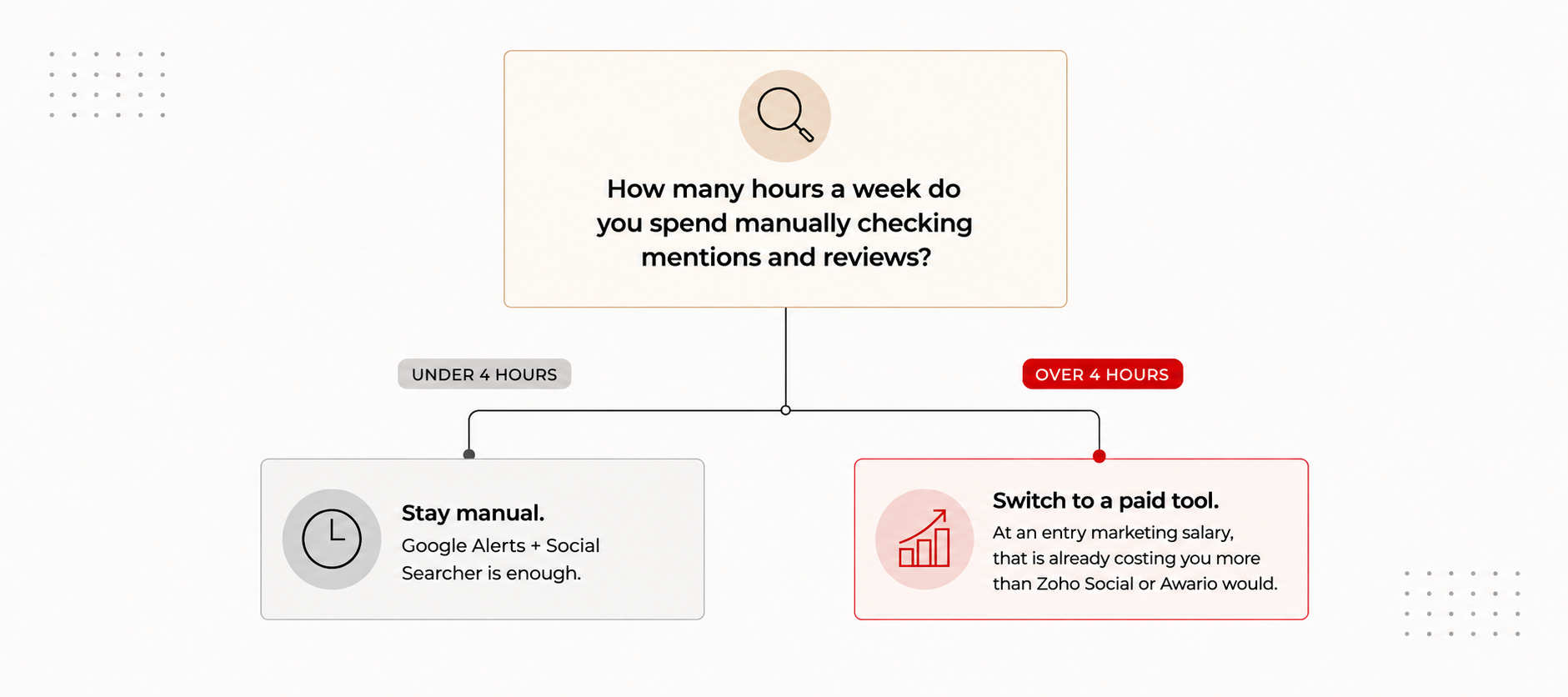
Most businesses do not need a consultant to work this out. A short, honest self-assessment usually does it.
“We have no visibility.” You need PR. If the market does not know you exist, the priority is building momentum through media relationships and earned coverage, not fixing a trust problem you do not yet have enough audience to have.
“We have visibility, but people don't trust us.” You need reputation management. If people are searching for you and leaving before converting, because of reviews, inconsistent listings, or a poor AI-generated summary, more PR will only drive more traffic to a broken endpoint. Our guide to online reputation management covers exactly this scenario.
A live crisis needs a faster read, and severity against speed is what decides the response.
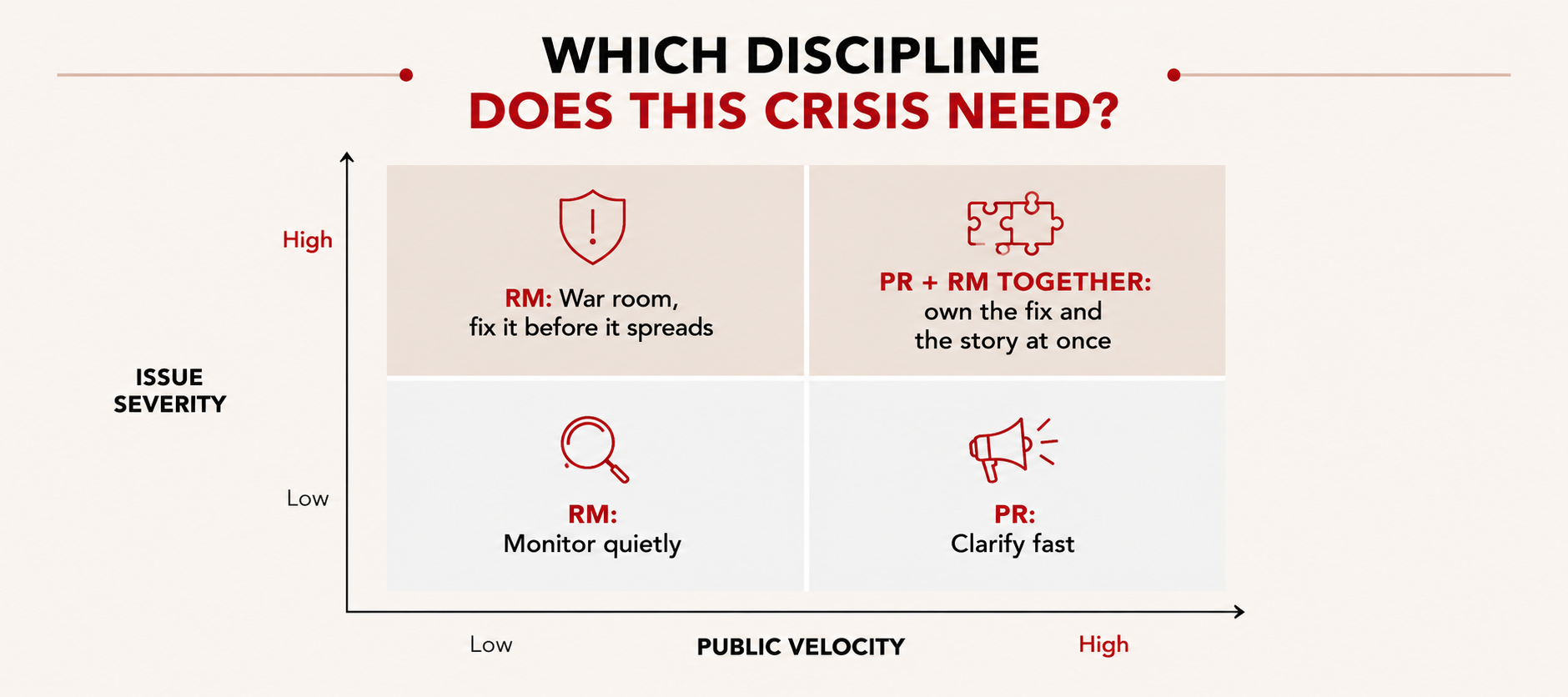
A low-severity, slow-moving issue needs quiet monitoring, not a release that draws attention to something nobody noticed. A low-severity issue spreading fast needs a quick, factual clarification before rumour fills the gap. A serious issue not yet public needs an internal fix first. A serious issue already spreading fast needs both disciplines at once: reputation management to fix the problem, PR to make sure the fix is what people hear about.
One caution worth carrying into any of these four boxes: a high-severity issue with low velocity rarely stays low-velocity for long. Left unresolved for more than a couple of days, it tends to become a high-velocity one whether a business is ready or not. Our guide to building a reputation management strategy from scratch covers how to prepare a response before you need one.
PR gets you looked at. Reputation management decides what people conclude once they look. Confusing the two does not just waste budget, it can actively make a bad situation worse, which is exactly what happened at Ola Electric.
Not sure which one your business needs right now?
At Bridgers, we work across both disciplines, which means the recommendation you get is based on what your business actually needs rather than which service happens to be easier for us to sell you.
Frequently Asked Questions
Public relations is measured by visibility: media mentions, coverage volume, share of voice. Reputation management is measured by risk: sentiment, trust scores, and how a brand appears in search and AI results. PR is the communication engine, an input. Reputation is the asset that engine is meant to protect, an outcome. A business can run strong PR and still have a reputation problem underneath it.
It depends who you ask. International bodies like CIPR and PRSA still frame PR as the umbrella discipline, with reputation as its outcome. India has moved further than most markets towards treating reputation management as its own board-level competency, evidenced by PRCAI and IIM Udaipur launching a dedicated Reputation Management MBA elective in 2024, and by leading Indian agencies restructuring reputation and crisis work into separate practice groups from standard media relations.
Because they use identical tools. A press statement, a piece of earned coverage, or a monitored social conversation typically serves both functions at once: it builds visibility (PR) while also shaping the searchable, citable record that determines trust (reputation management). Generative AI has tightened this overlap further, since large language models build brand descriptions almost entirely from earned, third-party coverage rather than paid content, meaning PR now directly feeds reputation outcomes inside AI systems.
The clearest recent Indian example is Ola Electric, which ran an aggressive PR strategy through 2024 while a service and reliability crisis went largely unmanaged underneath it. By Q3 FY26, sales had fallen 47% year on year and the stock traded more than 31% below its IPO price, while a competitor prioritising trust over visibility roughly doubled its post-IPO valuation in the same period. PwC's Global Crisis Survey puts the average cost of this kind of confusion at USD 2.4 million per crisis.
Ask which sentence describes you. If nobody knows your business exists, you need PR to build visibility. If people are finding you but not converting, because of reviews, search results, or how AI systems describe you, more visibility will not fix that and you need reputation management instead. For an active crisis, weigh severity against how fast it is spreading: quiet monitoring for low-severity, slow-moving issues, and both disciplines together for anything serious that is already spreading fast.
Most Popular Blogs
Newsletter
Categories
About the author
Anubhav Singh: Founder & Managing Director, Bridgers
Anubhav Singh is the Founder and Managing Director of Bridgers, with over 15 years of experience in media relations and strategic corporate communications. He has worked with leading Indian brands across sectors and holds a degree in Mass Communication & Video Production along with an MBA in Marketing. Under his leadership, Bridgers has grown into one of India’s leading PR agencies, known for transparency, innovation, and quality.
Related Articles


